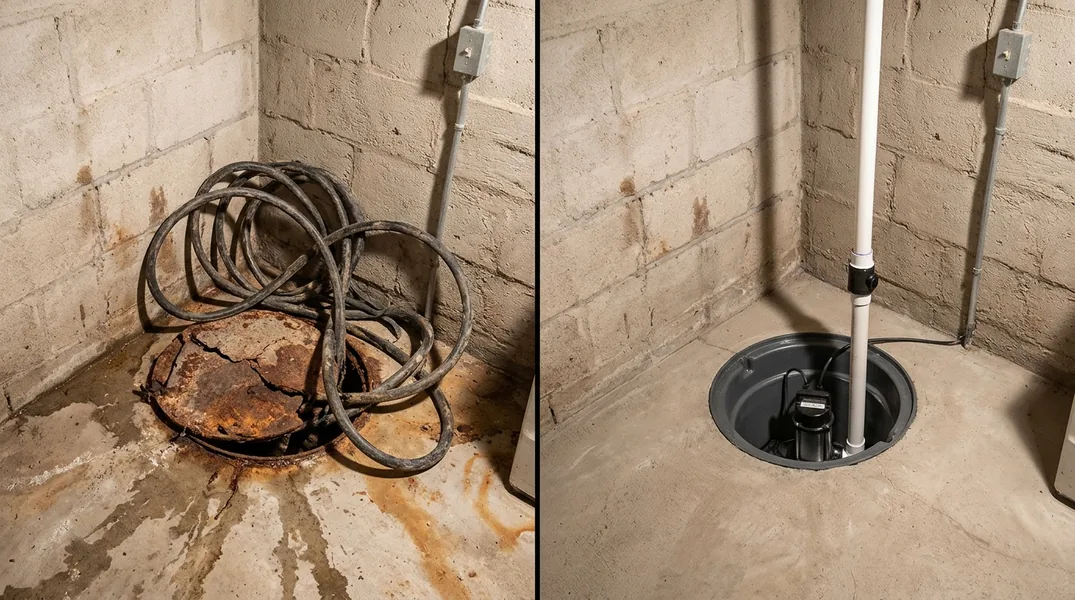
Why Sump Pump Maintenance Matters Before a Massachusetts Winter Storm
If you live in Brockton, you already know the pattern: a nor'easter rolls in, the rain comes down sideways, the ground saturates, and the power flickers. That combination is exactly when your sump pump earns its keep, and exactly when a neglected pump decides to quit. Winter storms in southeastern Massachusetts bring heavy rain, rapid snowmelt, and frozen ground that pushes water toward your foundation instead of letting it drain away. When that water reaches your basement, the sump pump is your last line of defense.
Here is the uncomfortable truth: most sump pump failures are preventable. Pumps that sit idle for months develop stuck floats, clogged intakes, and brittle check valves. Then the first big storm arrives, the pump runs for the first time in a year, and it either hums without moving water or refuses to start at all. A little maintenance in the fall, before the storm season peaks, is far cheaper than pumping out a finished basement in January. If your system is older or you have never had it inspected, a professional Basement Waterproofing evaluation can tell you whether your pump and drainage setup are actually up to the job.
The Core Sump Pump Maintenance Checklist for Homeowners
Start with the basics you can do yourself. Unplug the pump, then reach into the pit and clear out any silt, gravel, or debris that has collected around the intake. A strainer clogged with sediment forces the pump to work harder and can burn out the motor. Next, check the float. Lift it by hand to confirm it moves freely and that the pump kicks on when the float rises. If the float is stuck or waterlogged, replace it before the storm season. Then pour a few gallons of water into the pit and watch a full cycle: the pump should start, move water out quickly, and shut off cleanly when the pit drains.
Listen while it runs. Grinding, rattling, or a motor that sounds strained usually means a worn bearing or debris in the impeller. Check the discharge pipe outside too. It should slope away from the foundation and end well clear of the house, ideally several feet out. If the pipe still dumps water right next to the foundation, all that pumping just sends the water back where it came from. Finally, test the pump with a generator or a backup power source if you have one, because a pump that only works on grid power is a pump that quits during the outage that caused your flooding in the first place.
Don't Overlook the Sump Pump Check Valve and Battery Backup
The sump pump check valve is the small component homeowners forget and then regret. It sits on the discharge line and prevents water from flowing backward into the pit after the pump shuts off. Without a working check valve, every cycle ends with water draining back down, so the pump restarts again and again, short-cycling until it wears out. A failed valve can also let water siphon back into the basement during a storm. Inspect it for mineral buildup or a stuck flapper, and replace it if it looks crusty or does not seal. It is an inexpensive part that protects an expensive pump.
Then there is the battery backup sump pump, which matters more in Massachusetts than in almost any other climate. Winter storms knock out power regularly, and the heaviest water often arrives during the outage. A battery backup runs independently of the grid, so your basement stays dry even when the lights are off. Test the battery under load, check the terminals for corrosion, and confirm the backup actually pumps water, not just beeps when you press the test button. If your backup battery is more than three to five years old, plan to replace it before winter. For homeowners in Abington and nearby towns on the same storm track, this single upgrade prevents more power outage basement flooding than any other maintenance step.
Winter Storm Basement Prep: Beyond the Pump Itself
A healthy pump still needs somewhere to send the water. Walk the outside of your home before the first storm and confirm that gutters are clear, downspouts discharge at least four to six feet from the foundation, and the ground slopes away from the walls. If your yard grades back toward the house, no pump will keep up during a multi-day rain event. This is where Exterior Basement Waterproofing and Foundation Waterproofing come into play: they reduce how much water reaches the foundation in the first place, so your pump handles a manageable flow instead of a flood.
Inside, make sure the pump has a dedicated GFCI outlet that is not shared with a freezer or other appliance that could trip the circuit. Keep the pit lid secure, especially if children or pets are around, and clear stored items away from the pit so you can reach it quickly during a storm. If your basement relies on a Interior Drain Tile System, have the system flushed and the pit inspected as part of the same fall maintenance visit. Waterproofing components work as a team, and a pump is only as reliable as the drainage feeding it. Homeowners in Holbrook and Bridgewater face the same freeze-thaw cycles, so the same checklist applies across the region.
Sump Pump Maintenance Near Me: When to Call a Professional
Some tasks are DIY friendly, but a few warning signs mean it is time to call a pro. If your pump runs constantly, cycles every few minutes, smells hot, or leaves standing water in the pit after a cycle, the motor or the drainage around it needs professional attention. The same goes for a pit that fills even in dry weather, which often points to a groundwater or drainage problem that a new pump will not fix. If you are unsure whether your setup can handle a serious winter storm, a professional inspection removes the guesswork and catches small problems before they become flooded basements.
Brockton Waterproofing helps homeowners across the Brockton area get their sump pumps, check valves, and backup systems storm-ready. We inspect the full system, test it under real conditions, and recommend repairs only where they are actually needed. If you want to know what a service visit or system upgrade would run, you can review our pricing online, and we are happy to walk you through the options. Do not wait for the first nor'easter to find out your pump does not work. Call (774) 496-2966 or request a free estimate today, and head into winter with a dry basement and peace of mind.
Looking for a professional basement waterproofing contractor in Brockton? Brockton Waterproofing responds fast for all your basement waterproofing needs.
Get a Free QuoteOur services: Basement Waterproofing · Interior Drain Tile System · Exterior Basement Waterproofing